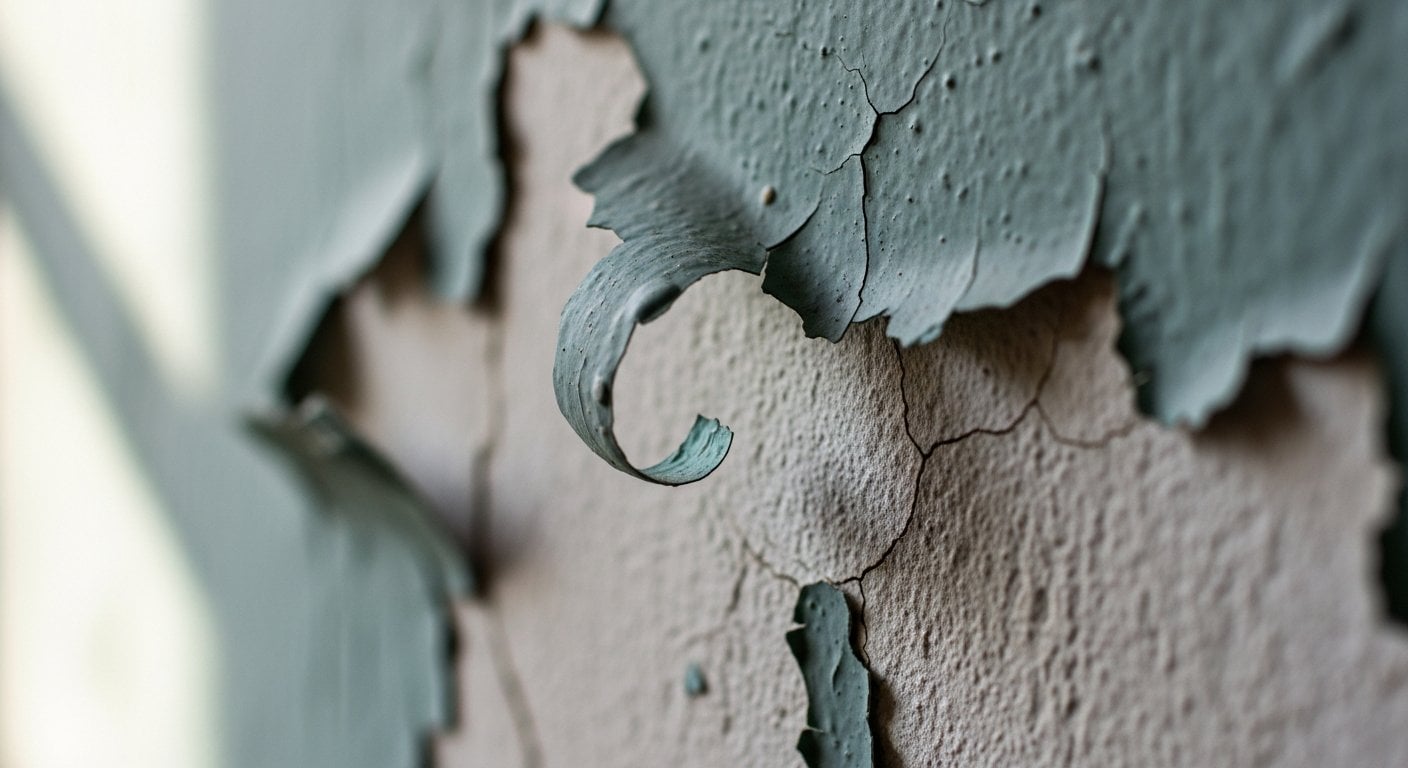
Peeling paint is never just cosmetic. It's your wall telling you something is wrong underneath. Here's how to diagnose the cause and actually fix it.
Peeling paint is one of the most frustrating things to see on your wall. It's ugly, it always seems to get worse, and painting over it almost never solves the problem for long. The good news is that peeling is always caused by one of a small number of issues, and once you identify the cause, the fix is usually straightforward.
Cause 1: Moisture
This is by far the most common cause of peeling paint in Orange County homes. Moisture gets behind the paint film — from a roof leak, a plumbing leak inside the wall, poor ventilation in a bathroom, or condensation from an exterior wall — and pushes the paint off the drywall. You'll usually see discoloration or a brownish ring before the peeling starts.
How to Fix It
Find the moisture source and fix it first. Patching and repainting without fixing the leak is a waste of time — the paint will peel again within weeks. Once the source is resolved and the wall is completely dry (check with a moisture meter if you can), scrape loose paint, sand the edges smooth, spot-prime with a stain-blocking primer like Zinsser BIN, and repaint.
Cause 2: Painting Over a Dirty or Glossy Surface
Paint needs something to grip. If the previous surface was greasy (a kitchen wall near the stove), dusty, or very glossy, the new paint doesn't bond — it sits on top and peels off in sheets. This usually shows up 6–12 months after the paint job, not immediately.
How to Fix It
Scrape and sand off the peeling areas. Wipe the wall with a degreaser (TSP substitute works great) to remove any grease or grime. Lightly sand glossy surfaces with 220-grit paper. Prime with a bonding primer like Zinsser Bulls Eye 1-2-3, then repaint. The key is giving the paint a clean, slightly rough surface to grab.
Cause 3: Incompatible Paint Layers
If the previous coat was an oil-based paint and someone applied a water-based paint directly over it without priming, the two layers don't stick to each other. The new layer eventually peels off in flexible sheets. This is common in older Orange County homes where original trim was oil-based.
How to Fix It
Scrape the loose layer, sand the edges, and prime with a bonding primer that bridges oil and water — Zinsser Cover Stain or B-I-N work well. Then repaint with the water-based product. Once primed, you can use any topcoat.
Cause 4: Wrong Paint for the Environment
Bathrooms, kitchens, and laundry rooms need paint that can handle moisture and be washed regularly. Flat wall paint in a bathroom will peel along the top of the shower within a year. The fix is to use a paint rated for high-moisture areas — look for "bath and spa" or "kitchen and bath" on the label.
When to Call a Professional
If the peeling covers a large area, if there's visible water staining, or if you see multiple layers of peeling paint, it's worth getting a second opinion. We've seen walls where "just peeling paint" turned out to be hidden water damage from a slow leak behind the drywall. A 10-minute inspection can save you from repainting the same wall twice.
Not sure why your paint is peeling? We'll diagnose the cause and give you an honest quote for the fix. Call (949) 704-7035 for a free consultation.
Ready to refresh your home?
Yellow Painting serves homeowners across Irvine, Lake Forest, Laguna Beach, and the rest of Orange County. Free on-site estimates, premium paints, 1-year workmanship warranty.
(949) 704-7035